With the Hand: How Masturbation is normal and Why it Doesn't Effect Health & Sports Performance (WE R STUPID Book 52) by Chopra Akshay
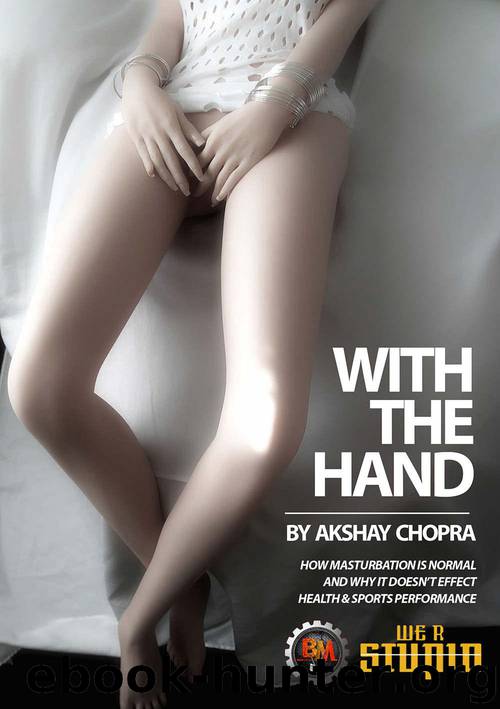
Author:Chopra, Akshay [Chopra, Akshay]
Language: eng
Format: azw3, epub
Publisher: We R Stupid
Published: 2019-04-10T16:00:00+00:00
US researcher Eli Coleman PhD, in a 2003 study in the Journal of Psychology and Human Sexuality, says that, contrary to traditional beliefs, masturbation has been found to be a common sexual behaviour and linked to indicators of sexual health. While there are no general indicators of ill health associated with masturbation, it can be powerfully negative or positive for many individuals. As an example, it is widely used in sex therapy as a means of improving the sexual health of the individual and/or relationship.
Promoting masturbation as a means of a public health strategy for sexual health is highly controversial; however, there are arguments and evidence that suggest that this may be an important part of any public health approach to improving sexual health. There is a need for more research on the impact of masturbation on self-esteem, body image, sexual functioning and sexual satisfaction and methods for using masturbation to promote sexual health.
A very interesting study was done by Bacak and Stulhofer, in 2011 in the International Journal of Sexual Health, to examine the prevalence of masturbation among sexually active young women in Croatia. Data were collected in 2010 in a cross-sectional national study of youth sexuality. The analyses were based on a subsample of 416 female participants aged 18 to 25 years old. Sixty percent of the young women reported that they masturbate. Results from the analysis indicate that the participants in the older age group (22 to 25 years old) were more likely to report masturbation as compared with their younger counterparts. Pornography use was positively associated with masturbation while attendance of religious services was associated with lower odds of reporting masturbation. The findings are discussed in the context of the sociocultural constraints on female sexuality and sexual health related to self-pleasuring.
Portuguese researcher Ana Carvalheira along with Isabel Leal, in a 2013 study in the Journal of Sex and Marital Therapy, suggest that, masturbation is a common sexual practice with significant variations in reported incidence between men and women. The goal of this study was to explore (a) the age at initiation and frequency of masturbation, (b) the associations of masturbation with diverse variables, (c) the reported reasons for masturbating and associated emotions, and (d) the relation between frequency of masturbation and different sexual behavioural factors. Participants were 3,687 women who completed a web-based survey. The results reveal a high reported incidence of masturbation practices among this sample of women. Among the women in this sample, 91% indicated that they had masturbated at some point in their lives, and 29.3% reported having masturbated within the past month. Masturbation behaviour appears to be related to a greater sexual repertoire, more sexual fantasies, and greater reported ease in reaching sexual arousal and orgasm. Women reported many reasons for masturbation and a variety of direct and indirect techniques. A minority of women reported feeling shame and guilt associated with masturbation. Early masturbation experience might be beneficial to sexual arousal and orgasm in adulthood. this study demonstrates that masturbation is a positive component in the structuring of female sexuality.
Download
With the Hand: How Masturbation is normal and Why it Doesn't Effect Health & Sports Performance (WE R STUPID Book 52) by Chopra Akshay.epub
This site does not store any files on its server. We only index and link to content provided by other sites. Please contact the content providers to delete copyright contents if any and email us, we'll remove relevant links or contents immediately.
Unwinding Anxiety by Judson Brewer(72958)
The Art of Coaching by Elena Aguilar(53136)
The Fast Metabolism Diet Cookbook by Haylie Pomroy(21115)
Rewire Your Anxious Brain by Catherine M. Pittman(18618)
Healthy Aging For Dummies by Brent Agin & Sharon Perkins RN(17029)
Talking to Strangers by Malcolm Gladwell(13331)
The Art of Thinking Clearly by Rolf Dobelli(10381)
Mindhunter: Inside the FBI's Elite Serial Crime Unit by John E. Douglas & Mark Olshaker(9296)
Crazy Rich Asians by Kevin Kwan(9261)
The Compound Effect by Darren Hardy(8903)
Tools of Titans by Timothy Ferriss(8346)
Periodization Training for Sports by Tudor Bompa(8237)
Becoming Supernatural by Dr. Joe Dispenza(8185)
Wonder by R. J. Palacio(8085)
Crystal Healing for Women by Mariah K. Lyons(7911)
Bodyweight Strength Training by Jay Cardiello(7894)
Change Your Questions, Change Your Life by Marilee Adams(7717)
Therapeutic Modalities for Musculoskeletal Injuries, 4E by Craig R. Denegar & Ethan Saliba & Susan Saliba(7706)
Nudge - Improving Decisions about Health, Wealth, and Happiness by Thaler Sunstein(7678)
